Unintended Consequences in Local Government
Reza Schwitzer
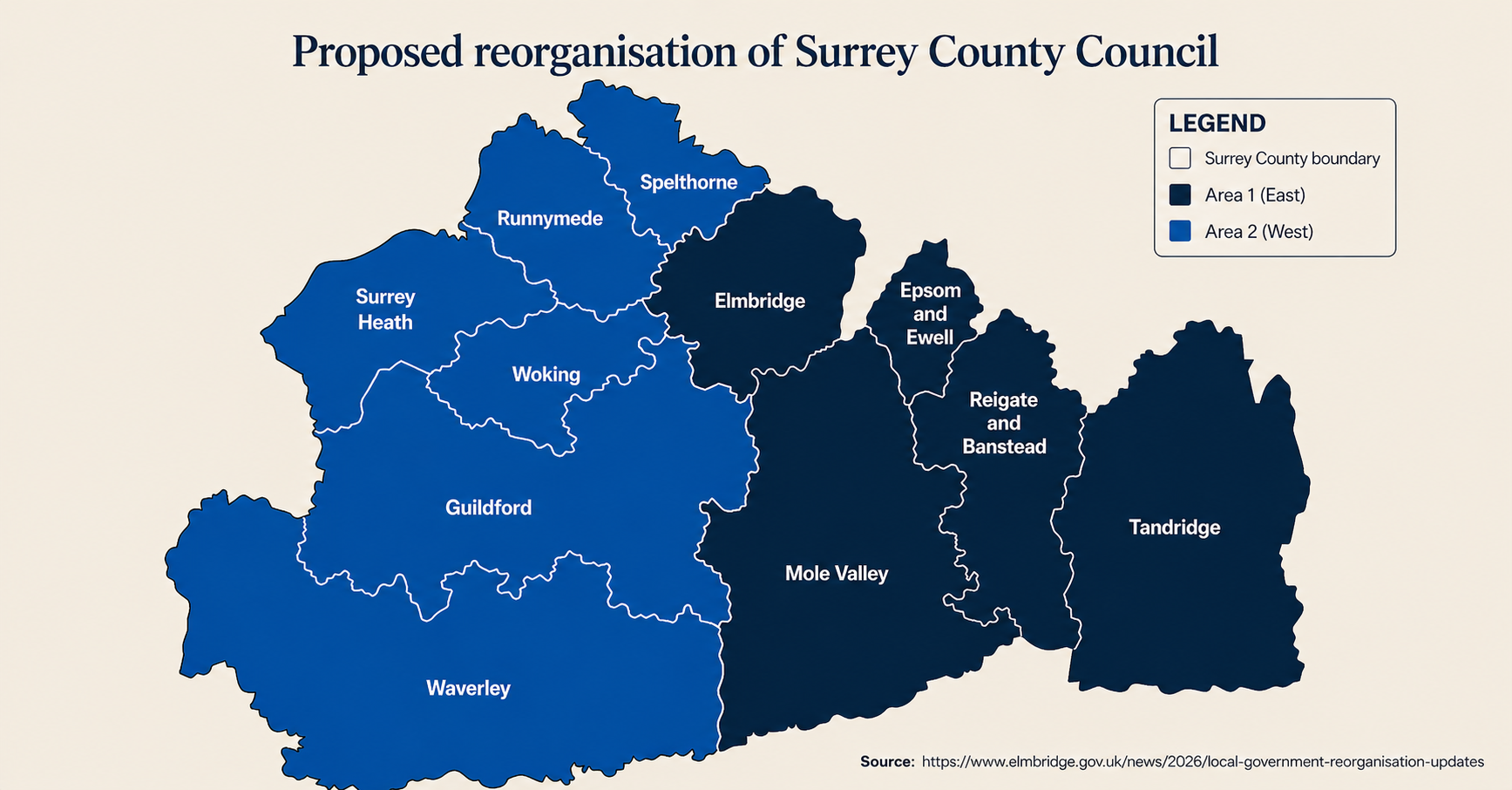
A recent article by Ruth Lucas in SchoolsWeek was the first I've seen on a topic that needs more coverage than it's currently getting. OK, it's about local government re-organisation, but please don’t click away just yet…
We know already that many local public services currently struggle with a lack of scale. In my career I've seen it particularly with Special Educational Needs and Disabilities (SEND) and Children's Social Care (CSC), though there are other examples too. In those examples, what happens is that Local Authorities (LAs) are commissioning services that are so specialist they can’t be sensibly planned, delivered, or managed at the Local Authority level. For example, if you are likely to have one, or two, or no children with a certain specialist need in your area at any given time, why would you ever think to build provision for it?
That is in part why we've ended up with the travesty of children being carted across the country, far away from their support networks, in order to access the specialist provision they need. In the case of secure children’s homes, that has led to them being sent as far away as Scotland. It's a classic collective action problem - all LAs need the provision, but it doesn’t make sense for any one of them individually to create it.
When I was in the DfE, that led to interesting conversations about the ‘right’ level to deliver government services at (we called it “subsidiarity”). The TL;DR was this: some of these specialist services need to be commissioned and managed at a wider level - either regionally or nationally - if the taxpayer is going to get best value and the children are to get the best service.
And yet central government's reorganisation of local government, whilst well motivated in terms of reducing layers of bureaucracy, is likely to actively make services even more localised. That’s because in some areas where the county council currently commissions services, these will now be commissioned by smaller unitary authorities. For example, Surrey County Council is being replaced by East Surrey and West Surrey unitary authorities – which will now take over responsibility for SEND and CSC.
The fact that the SchoolsWeek piece quotes Damian Hinds as speaking against these reforms is particularly interesting, because he has seen this issue from both the DfE Ministerial angle and the point of view of an MP whose constituency is in an affected area. In fact, he was the very Secretary of State in post when we did our subsidiarity work, and so he will understand better than most the risks of commissioning and providing highly specialist services on a smaller regional scale.
So what? You might ask. What will this mean in reality? I think the biggest immediate risk is around reforms to SEND – a top priority for Bridget Phillipson, and something on the minds of hundreds of thousands of parents across the country. It’s bad enough if this reorganisation undermines existing delivery and value for money, but if you couple that with a system which is about to undergo its biggest reform in over a decade, you have a serious problem. How can we expect to successfully drive major changes in a complex system if at the same time we’re also fundamentally redrawing the structures of that system? The biggest risk here is a lack of grip at a local level while accountabilities move from the county to the unitary level – not something you want to hear when safeguarding vulnerable children and major government reforms are also involved.
So, what’s the solution? I expect that will need more words than I have left here - but I’d be willing to bet my house that we’ll be hearing a lot more about this issue in the months to come.
Reference: https://schoolsweek.co.uk/will-local-government-reorganisation-improve-send/

